What Article 255 of the Code of Ukraine on Administrative Offenses Regulates Article 255 of the Code of Ukraine on Administrative Offenses (CUAO) defines who exactly has the right to draw up ...

09Oct


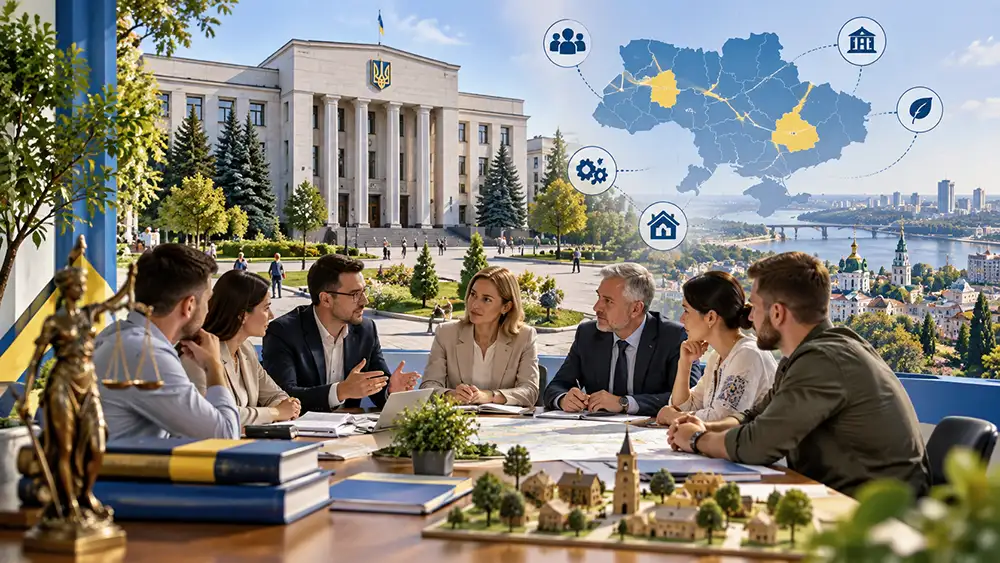
The Law of Ukraine “On Local Self-Government in Ukraine” No. 280/97-VR was adopted on May 21, 1997. It defines how territorial communities manage local affairs, which bodies are created for this purpose, who is responsible for what, and within what limits local councils, heads, and executive bodies may act. The law came into force on June 12, 1997.
Simply put, this is one of the main laws that explains who makes decisions in your city, town, or village. It regulates a significant portion of issues related to the work of the local council, city or town head, executive committee, elder, municipal property, and the local budget.
Its legal basis is directly enshrined in the Constitution of Ukraine. Article 140 of the Constitution establishes the right of the territorial community to independently resolve local issues within the limits of the Constitution and laws of Ukraine.
Local self-government is the ability of residents of a particular community to independently solve local issues either directly or through bodies elected by them.
In the Law itself, local self-government is defined as a state-guaranteed right and the real capacity of a territorial community to resolve local matters within the Constitution and laws of Ukraine.
In other words, the state is not supposed to decide everything on behalf of the community. A significant portion of everyday issues is transferred to the local level.
In practice, this concerns, in particular:
However, the local council cannot make any decision just because the deputies want it. Every action must have a legal basis and fall within the competence of the respective body.
The main subject is neither the city mayor nor the council. The primary subject is the territorial community.
The law defines the territorial community as residents united by permanent residence within the respective territory. The community is the bearer of local self-government.
The Law of Ukraine on Local Self-Government provides for an entire system of bodies and officials.
They include:
The Constitution separately establishes that local self-government can be carried out by the community directly and through village, settlement, city councils and their executive bodies. District and regional councils represent the common interests of territorial communities.
The local council is an elected representative body. It consists of deputies and represents the interests of the territorial community.
The council adopts a significant portion of the key decisions of the community. The law clearly distinguishes the issues decided by the council itself and the powers of its executive bodies.
Simply explained, the council operates as follows:
Within their lawful powers, local self-government bodies make decisions that are mandatory for execution in the respective territory. This is explicitly provided for in Article 144 of the Constitution of Ukraine.
The head occupies a distinct place in the system of local self-government. They should not be equated with the entire local government.
They cannot unilaterally replace the council and decide issues that by law belong exclusively to the competence of deputies. At the same time, the head organizes much of the council’s and its executive structures’ work and performs other functions provided by law.
Therefore, the answer to the question “Who is more authoritative – the city head or city council” depends on the particular issue. The law distributes competence among different bodies and does not provide unlimited powers to a single official.
Executive bodies are necessary for the practical implementation of local decisions and daily management.
For example, the council may approve a program or budget decision, but the direct execution of much of the tasks is ensured by the executive bodies, structural units, and officials.
It is important to distinguish:
This division has practical significance. If a citizen wants to challenge a decision or address a specific issue, they first need to establish which body had the competence to resolve it.
Local self-government is impossible without its own material and financial basis.
Article 142 of the Constitution of Ukraine attributes to such a basis movable and immovable property, local budget revenues, other funds, land and natural resources that belong to territorial communities, as well as objects of communal ownership of communities.
The Law on Local Self-Government also regulates the right of communal ownership. This relates not only to city council buildings. A much broader range of property can be communal – real estate, housing stock, communal enterprises, educational, cultural, sports institutions, land, and other resources if they belong to the respective territorial community.
Therefore, the property of a communal enterprise, the community budget, or a communal land plot is not “the mayor’s property.” The legal owner, in cases prescribed by law, is the territorial community, and the corresponding bodies manage such property within their granted powers.
The Law of Ukraine “On Local Self-Government in Ukraine” concerns not only officials and deputies. It defines mechanisms for residents’ participation in local life.
Depending on the specific procedure, citizens can participate in solving local issues through forms of direct democracy and legally provided participation tools.
Practically, this may mean:
The Constitution additionally guarantees citizens the right to participate in state governance and to elect and be elected to local self-government bodies.
This is another tool for local participation.
At residents’ initiative, house, street, neighborhood, and other self-organization bodies of the population may be created. By law, the council may transfer to them part of its competence, finances, and property in the prescribed manner.
This mechanism allows residents to solve issues not only at the city or community level but also at the level of a particular house, block, or other part of the settlement.
No. Local self-government is autonomous only within the limits of the Constitution and laws of Ukraine.
This is a fundamental boundary. The council, executive committee, or head cannot create powers for themselves that the law does not grant.
If an act of a local self-government body or official contradicts the Constitution or laws, its legality may be reviewed in the prescribed legal manner, including by a court. The Constitution expressly guarantees judicial protection of local self-government rights, and the Constitutional Court’s case law confirms the possibility of judicial control over the legality of decisions of local self-government bodies.
The Constitution establishes the fundamental principles. Law No. 280/97-VR describes them in much greater detail.
In Chapter XI of the Constitution of Ukraine, articles 140–146 are dedicated to local self-government. They define the main principles, bodies, material basis, key powers, and guarantees.
The Law of Ukraine on Local Self-Government specifies:
Therefore, when resolving a specific issue, it is usually insufficient to read only one article of the Constitution. It is necessary to check the current version of the specialized law and, depending on the situation, other normative acts.
Queries like “Law of Ukraine on Local Self-Government 2021,” “Law of Ukraine on Local Self-Government 2022,” or “Law of Ukraine on Local Self-Government latest version” may lead to outdated materials.
As of September 18, 2026, Law No. 280/97-VR remains in effect. The official database of the Verkhovna Rada shows the current edition as of August 5, 2026.
For legal matters, it is advisable to proceed as follows:
This is especially important in disputes regarding land, municipal property, local budgets, council decisions, or officials’ powers.
The official number is No. 280/97-VR. The law was adopted on May 21, 1997.
Yes. As of September 18, 2026, the document has the status “in force.”
It defines how local government is organized at the territorial community level, the powers of councils, heads, and executive bodies, how municipal property and local finances are managed, and how residents can participate in solving local issues.
The primary subject is the territorial community. It exercises local self-government directly and through bodies established in accordance with the law.
The interaction procedure between the head and council is defined by law and depends on the specific procedure. The law does not establish a general unlimited right for the city head to independently cancel any council decision.
Decisions of local self-government bodies adopted within their lawful powers are mandatory for execution in the respective territory. This is provided for in Article 144 of the Constitution of Ukraine.
The most reliable source is the official “Legislation of Ukraine” database of the Verkhovna Rada of Ukraine. The document’s page displays its status, current edition, and change history.
Yes, if there are legal grounds. The legality of a specific decision may be verified in court. To determine the method of protection, one must consider the content of the decision, the applicant’s rights, and the nature of the legal relations.
The material and financial base of local self-government may include communal movable and immovable property, local budget revenues, land, natural resources, and other assets provided by law.
Local self-government bodies represent territorial communities and solve local issues within legally defined limits. At the same time, the law may delegate certain powers of executive authorities to them. The Constitution provides that the exercise of such delegated powers is to be financed by the state.