 Featured


Construction License on Poshuk.info is:
Submit a request and receive professional advice and offers for obtaining a construction license.
* by submitting a request on the Poshuk.info website, it will be received by all verified legal and advocacy companies that meet the professional criteria of this category of services, so you will be able to get maximum information from various professional sources and choose the best conditions.
FeaturedA construction license in Ukraine is one of the key authorization instruments for companies that plan to carry out construction, installation, reconstruction, engineering and specialized works on facilities with an increased level of responsibility. For a developer, general contractor, subcontractor or engineering company, proper confirmation of the right to perform construction activities has practical importance: it affects the ability to legally perform work, participate in tenders, conclude contracts with clients and confirm the professional reliability of the business.
As of 2026, it is important to distinguish between two related but different concepts: a license for construction activities and a permit for construction works. A license or declaration on conducting business activity confirms the company’s right to perform relevant construction works as a business entity. A permit for construction works concerns a specific construction facility, in particular facilities with consequence classes CC2 and CC3.
According to the Law of Ukraine «On Regulation of Urban Development Activities», business activity related to the construction of facilities with medium CC2 and significant CC3 consequences is subject to licensing, and the licensing authority is the central executive body responsible for state architectural and construction control and supervision. At the same time, during martial law, DIAM explains that the right to conduct business activity may be acquired by submitting a declaration, which temporarily replaces a construction license for this period.
A construction license is not required for every entrepreneur who performs repair or finishing works. It primarily applies to companies working with medium- and high-responsibility facilities, where mistakes in design, installation or construction may create risks for people, infrastructure, property or the environment.
Most often, obtaining a construction license or submitting a declaration on conducting business activity is required for the following entities:
For small repairs, cosmetic finishing or works that do not affect load-bearing structures and do not create risks for engineering systems, licensing is usually not a key requirement. However, in each case it is necessary to assess not only the name of the works, but also the facility’s consequence class, the content of the contract, the company’s role in the project and the client’s requirements.
In market practice, search queries are often formulated as «CC1 license», «CC2 construction license», «CC3 construction license», «obtain a DIAM license», «turnkey construction works license». From a legal point of view, the most important factor is the consequence class of the facility.
CC1 facilities are facilities with minor consequences. For them, a classic construction license for performing works is usually not the main requirement. However, this does not mean that construction can be carried out without documents. For CC1 facilities, a construction passport, notification of the start of construction works, properly prepared land documentation, design solutions and documents for commissioning the facility may be required.
CC2 facilities include residential, public, industrial, commercial or infrastructure facilities where the possible consequences of an error are significant. To work with such facilities, a contractor or general contractor must confirm the right to conduct construction activities, have qualified personnel, a material and technical base, an organizational structure and documents confirming the ability to perform the declared types of work.
CC3 facilities are the most responsible facilities, including complex engineering, industrial, transport, energy or socially important facilities. For such projects, the requirements for the contractor are the highest: the qualifications of specialists, experience, technical support, quality control system, occupational safety, safe performance of works and the company’s ability to be responsible for complex construction processes are assessed.
Licensing of construction activities is not limited only to the erection of buildings. There are many areas in the construction sector that may be part of a complex project and require proper documentary confirmation of the right to perform works.
The main areas of activity include:
For SEO search, users often look for such phrases as «license for construction works», «license for reconstruction», «license for major repairs», «license for installation works», «license for engineering networks», «permit for CC2 construction», «declaration for construction activity», «registration of a construction license in Ukraine».
The list of works depends on the specific project, consequence class, technical assignment and the company’s role in construction. In practice, legal companies analyze which specific works the applicant plans to perform in order to correctly prepare the document package.
Most often, these include the following types of works:
It should also be taken into account that some related areas may require not a construction license, but other permits. For example, fire protection works, security systems, works with hazardous waste, handling certain materials or specialized equipment may be regulated by separate rules.
To obtain or confirm the right to conduct construction activity, a company must look not like a formal legal entity «on paper», but like a real contractor capable of performing works. That is why a legal, personnel and technical audit is carried out before submitting documents.
The key requirements usually relate to the following areas:
An alternative option is to purchase a ready-made company with a construction license. On this page, you can view ready-made companies and contact their owner.
The document package depends on whether the company submits a declaration for the period of martial law, confirms an existing license, updates information or prepares for full licensing after a change in the legal regime. However, the basic list of documents is similar in most cases.
Usually, the following documents are prepared:
If a permit for construction works for a specific CC2 or CC3 facility is being obtained at the same time, other documents are submitted through Diia. In particular, a registration number of project documentation in the Unified State Electronic System in the Construction Sector is required, and documents confirming ownership or use of the land plot are submitted if the relevant information is absent from the State Register of Property Rights. The Diia portal states that submitting the application takes approximately 20 minutes, registration takes 10 days, and the service is free of charge.
The procedure depends on the legal regime, the applicant’s status and the specific purpose: to obtain the right to conduct construction activity, update an existing license, confirm the unlimited validity of a license, prepare for a tender or obtain a permit for a specific facility.
The optimal algorithm looks as follows:
This is one of the most common questions in the field of construction law. Misunderstanding these documents may lead to loss of time, rejection in a tender or violation of urban development legislation.
A construction license or declaration on conducting business activity concerns the company as a contractor. It confirms that the business entity has the right to perform certain types of construction activity.
A permit for construction works concerns a specific facility. It is obtained by the client or an authorized person for the construction of a CC2 or CC3 facility. After the permit is issued, the record appears in the Register of Construction Activities, and the result can be checked through the Unified State Electronic System in the Construction Sector.
Simply put: a license or declaration answers the question «whether the company has the right to perform such works», while a permit answers the question «whether works may begin on this specific facility».
Even if a company actually operates in the construction market, the documents may be prepared incorrectly. Most often, problems arise not because of a lack of experience, but because of legal inconsistency in the document package.
Common risks include:
To avoid these risks, it is advisable to conduct a preliminary audit before submitting documents. For a construction company, this is especially important if it plans to work with public procurement, large clients, investors or international partners.
Independent registration of a construction license or declaration is possible, but in practice it often takes a lot of time. It is necessary to correctly determine the legal regime, prepare documents, check the personnel structure, material and technical base, list of works, registration data and support the submission.
A professional legal or law firm helps to:
It is especially important to obtain consultation if the company works with CC2 or CC3 facilities, plans reconstruction, major repairs, installation of engineering networks, construction of industrial facilities, participation in Prozorro or conclusion of contracts with large clients.
On the Poshuk.info page, you can view a list of legal and law firms specializing in obtaining construction licenses, submitting declarations, supporting construction businesses, preparing documents for DIAM, the Unified State Electronic System in the Construction Sector and other procedures in the field of urban development.
The main advantage of the service is that the client does not need to independently visit websites of different legal companies, call each one separately or send dozens of identical requests. It is enough to create one consultation request on the Poshuk.info website – and it will be received by legal and law firms that are verified on the website and meet professional criteria in the «construction license» category.
This format allows you to:
For companies planning to operate in the construction sector in Ukraine, this is a convenient way to find specialists in construction activity licensing, declaration registration, obtaining permits for construction works, preparation for tenders and support of construction projects.
A construction license in Ukraine is not a formality, but an important element of legal security for a construction business. For CC2 and CC3 facilities, proper registration of the right to conduct construction activity, preparation of documents, confirmation of personnel, material and technical base and compliance with DIAM requirements directly affect the ability to work legally, participate in tenders and conclude contracts with reliable clients.
Due to the reform of the construction sector, the operation of the Unified State Electronic System in the Construction Sector, martial law and the declarative mechanism instead of a classic license, it is important not to rely on outdated advice, but to check the current procedure for your specific situation. On Poshuk.info, you can quickly find legal and law firms specializing in obtaining construction licenses, declarations for construction activity, permits for construction works and comprehensive support of construction businesses in Ukraine.
No. Not all construction, repair or finishing works require a license. The main focus is on works on CC2 and CC3 facilities, as well as complex construction processes related to risks for safety, structures, engineering networks or operation of the facility.
During martial law, a declaration on conducting business activity may temporarily replace a construction license. DIAM directly states that such a declaration replaces a construction license for this period.
No. To work with CC2 and CC3 facilities, the company must have a properly formalized right to conduct construction activity. In addition, a permit for construction works may be required for a specific facility.
The term depends on the condition of the company’s documents. If personnel, technical and registration documents are already prepared, the procedure may be completed faster. If KVED codes need to be changed, employees formalized, equipment confirmed or documents corrected, the preparatory stage may take longer.
In many tenders, clients require confirmation of the right to perform relevant works. This may include a construction license, declaration, permits, confirmation of personnel qualifications, material and technical base and experience in performing similar contracts.
Yes, but it must properly formalize its presence in Ukraine and confirm the right to conduct construction activity. DIAM states that non-residents operating through permanent establishments may, during martial law, acquire the right to conduct construction activity for CC2 and CC3 facilities by submitting the relevant declaration.
Do you have any questions about obtaining a construction license? Get answers by creating a request:

How Financial Services Licensing Works in 2026 In 2026, the basic principle remained unchanged: financial services can be provided by institutions and other persons who have the right to conduct
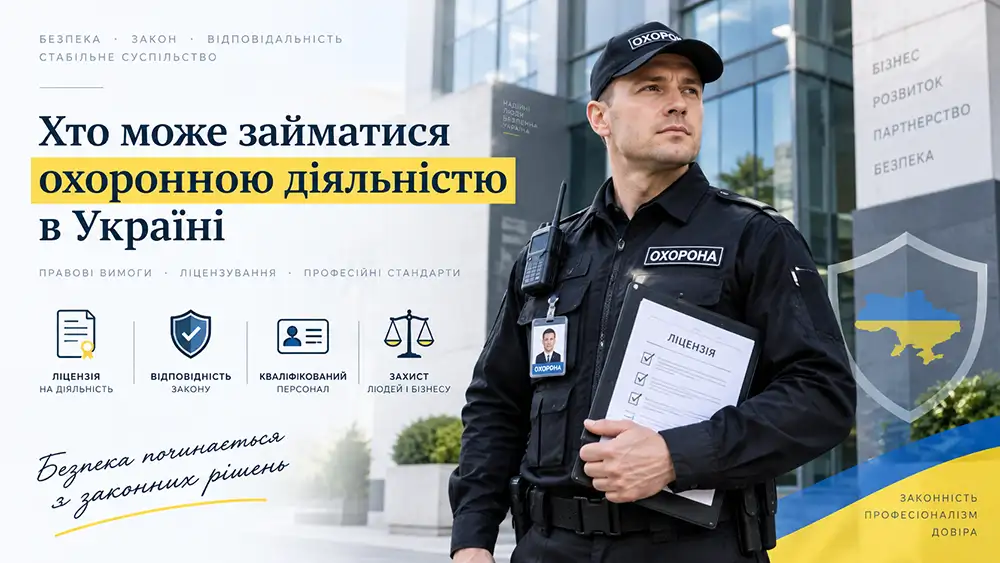
Security of property and individuals is a type of business activity that requires special rights. The basic rules are defined by the Law of Ukraine “On Security Activities”. The law

What License Is Required for Fuel Trading The licensing procedure is defined by the Law of Ukraine No. 3817-IX. To operate a gas station (AZS), LPG station (AGZS), gas point,

A construction license is one of the key permitting instruments for companies planning to perform construction, installation, road, engineering or general contracting works on facilities with an increased level of

To open a pharmacy you need an official license for the retail sale of medicinal products, approved by Ukrainian legislation. This permit guarantees the safety and quality of pharmaceutical services. According

A medical practice license is a mandatory state authorization for licensing business activity in medical practice. In simple terms: if you (as a clinic, medical center, sole proprietor/doctor, dentistry, diagnostics
The Poshuk.info portal was created for manual and quick search of providers of various services, classified by popular requests of our consultants.
You only need to go to the desired service category, apply for the service, delete offers from providers, cancel the offer for yourself.
For advertising placement, contact admin@poshuk.info
support@poshuk.info
Mn — Fr: 9:00 – 19:00
St: 10:00 – 17:00

