Non-hallucinogenic psychedelics are experimental compounds developed based on the mechanisms of action of classical psychedelics but without pronounced changes in perception, hallucinations, or ...

01Oct


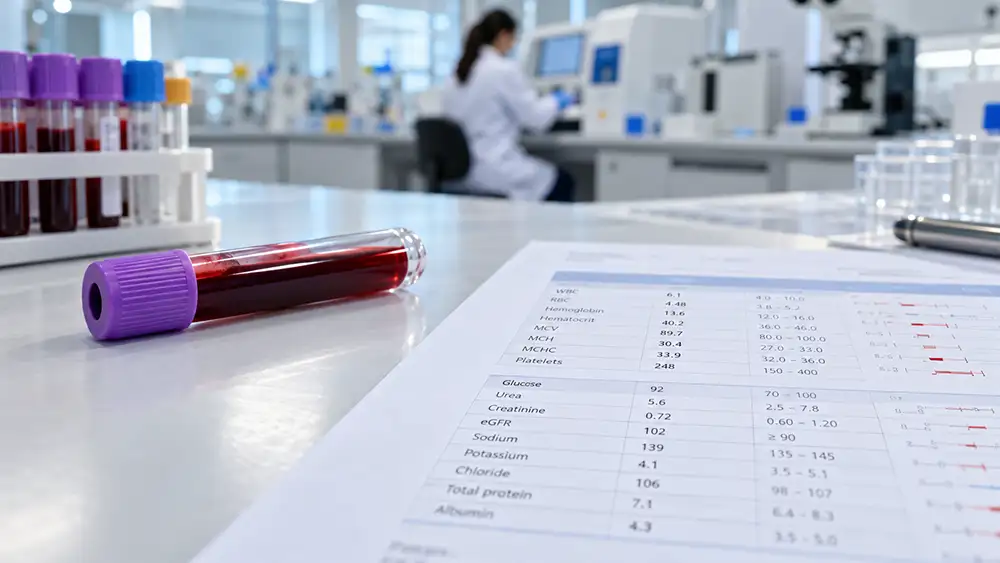
Ferritin is a protein that stores iron and reflects its reserves in the body. That’s why the ferritin test helps detect iron store depletion earlier than a decrease in hemoglobin would show up in a complete blood count.
Low ferritin most often indicates iron deficiency. However, a single result doesn’t explain why the deficiency occurred. Causes may include regular blood loss, insufficient iron intake through food, impaired absorption, or increased body demand.
Another feature of ferritin is that it belongs to acute phase proteins. During infections, chronic inflammation, some liver diseases, and other conditions, its concentration can increase. Therefore, a “normal” ferritin level does not always exclude iron deficiency.
There is no single universal number for all situations. Laboratory reference ranges and clinical thresholds used by doctors to diagnose iron deficiency may differ.
The American Society of Hematology recommendations published in 2026 suggest that for adults a ferritin concentration of ≤30 ng/mL is a criterion for iron deficiency. For individuals with symptoms or ongoing risk factors, a clinically significant threshold may be ≤50 ng/mL. In inflammatory diseases, ferritin assessment is recommended alongside transferrin saturation: deficiency may be indicated by ferritin below 100 ng/mL or transferrin saturation below 20%.
Up-to-date recommendations can be viewed on the American Society of Hematology website.
At the same time, the WHO recommendations use different diagnostic thresholds. For adults without inflammation, ferritin below 15 µg/L indicates depleted iron stores, and in the presence of inflammation, WHO allows a threshold of 70 µg/L. Numeric values in ng/mL and µg/L for ferritin are identical: 30 ng/mL = 30 µg/L.
Detailed guidelines on interpreting results are published by the World Health Organization.
Thus, a result of “ferritin 20” should not be evaluated solely by the “normal” mark on the lab report. Important factors include age, sex, menstrual blood loss, pregnancy, symptoms, hemoglobin, inflammation markers, and other test results.
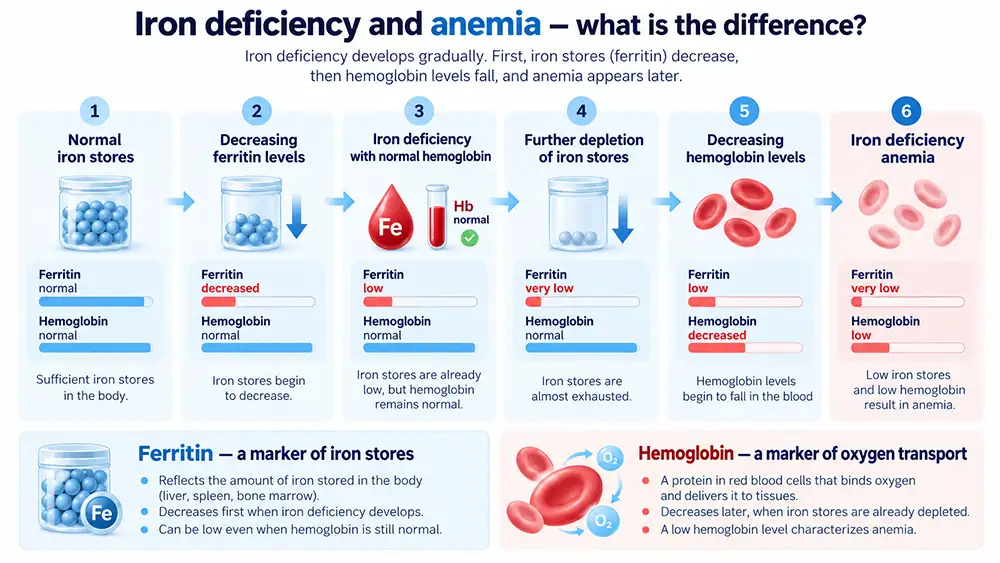
Both ferritin and hemoglobin indicate different stages of iron metabolism.
Ferritin shows iron stores. Hemoglobin is part of red blood cells and carries oxygen. When the body starts losing iron, its reserves gradually become exhausted first. At this stage, hemoglobin may still remain within laboratory normal ranges.
That is why iron deficiency without anemia is possible.
If the deficiency progresses, there is insufficient iron for normal hemoglobin production. This can lead to iron deficiency anemia. The British Society of Gastroenterology notes that ferritin is the most useful single indicator of iron stores, although other parameters are needed if hidden deficiency is suspected.
Symptoms are nonspecific. They cannot confirm a diagnosis without lab tests, but their combination with risk factors warrants checking iron metabolism.
Most commonly, people notice:
None of these symptoms are specific solely to iron deficiency. Similar pictures may be caused by thyroid dysfunction, vitamin B12 deficiency, infections, sleep disorders, and many other conditions.
For women of reproductive age, common causes include heavy or prolonged menstruation. The important factor is not the menstruation itself but the volume of regular blood loss.
In men and postmenopausal women, unexplained iron deficiency requires especially careful investigation for the source of bleeding, including in the gastrointestinal tract. The British Society of Gastroenterology emphasizes that iron deficiency anemia in an adult without an obvious cause is sometimes associated with GI diseases; therefore, additional examinations may be recommended by a doctor.
The risk increases with unbalanced diets, significant restriction of animal products without thoughtful substitutions, and prolonged caloric deficiency.
However, diet alone does not explain every low ferritin case. If levels continue to drop after treatment, causes of loss or impaired absorption must be sought.
Iron deficiency may arise in celiac disease, inflammatory bowel disorders, after some stomach or intestinal surgeries, and other conditions affecting nutrient absorption.
Celiac disease is found in about 3-5% of iron deficiency anemia cases; thus, British clinical guidelines recommend considering it when examining such patients.
Demand rises during pregnancy, periods of active growth, and other physiological states. Regular blood donation can also gradually deplete stores.
Ferritin alone doesn’t always provide a full answer. The doctor chooses the extent of testing depending on results, symptoms, age, and probable causes.
In practice, diagnosis often proceeds as follows:
Additional tests depend on the situation. They may include screening for celiac disease, vitamin B12 and folate levels, gynecological examinations, or gastrointestinal investigations.
Seeing a low number and immediately buying a supplement seems like a simple solution. The problem is that this can temporarily raise the numbers but leave the cause of deficiency unaddressed.
It is especially dangerous to take iron supplements for months without identifying the source of regular blood loss. Some patients require treatment of the underlying disease, not just replenishment of stores.
Excess iron intake is also undesirable. Oral supplements can cause nausea, abdominal pain, constipation, or diarrhea. Dosage, formulation, and treatment duration are better determined after evaluating laboratory data.
Booking an appointment with a family doctor or therapist is reasonable once iron deficiency is laboratory confirmed, especially if ferritin is 30 ng/mL or lower, symptoms are present, or levels continue to drop. The new ASH guidelines use ≤30 ng/mL as the diagnostic threshold for iron deficiency in most adults.
Do not delay consultation if low ferritin occurs in men, postmenopausal women, during pregnancy, with very heavy menstruation, recurrent deficiency after treatment, unexplained weight loss, or gastrointestinal symptoms.
If fainting, severe shortness of breath at rest, chest pain, heavy bleeding, black tarry stools, or rapid health deterioration occur, urgent medical evaluation is required. In such cases, ferritin level is not the only important factor.
