Minimalist facial care is not about giving up cosmetics, but about reducing the routine to products with a clear purpose. For most people, the basic scheme consists of cleansing, moisturizing, ...

15Oct


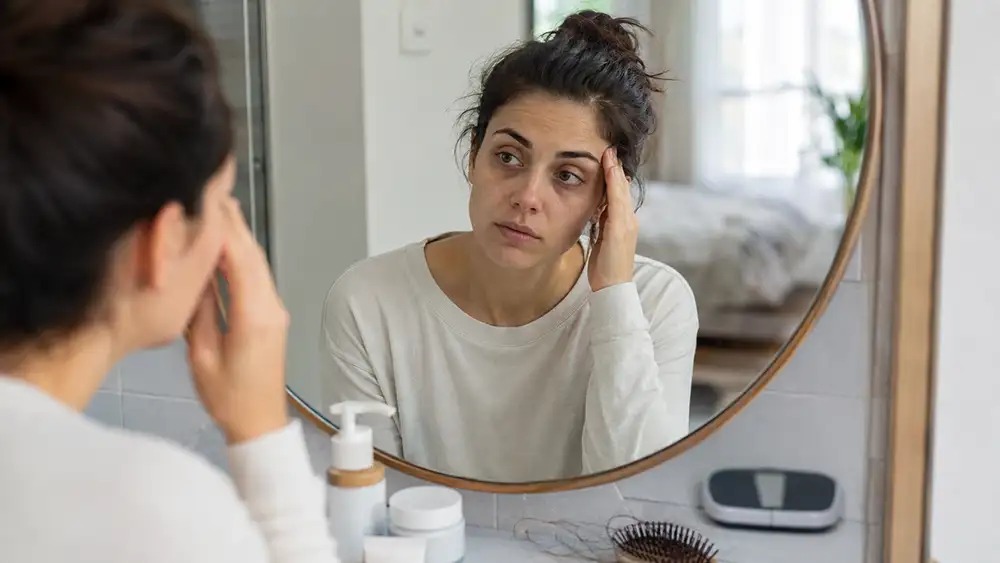
Stress changes the body’s functions not only on an emotional level. During intense or prolonged tension, the “hypothalamus – pituitary – adrenal” axis is activated, and the levels of cortisol and other stress response hormones in the blood change. If this state lasts a long time, the consequences often become visible externally — on the skin, hair, and weight.
Chronic stress can simultaneously affect the condition of the skin, the hair growth cycle, sleep, and eating behavior.
The skin closely interacts with the nervous and immune systems. During stress, the body produces hormones and signaling substances more actively that can affect the sebaceous glands, inflammatory reactions, and tissue regeneration.
The American Academy of Dermatology notes that stress can exacerbate acne and the course of some other skin conditions.
Stress alone is not considered the sole cause of acne. However, it can worsen an already existing skin condition. Sebaceous glands become more active, inflammatory reactions change, and damaged areas may heal more slowly.
Most commonly you can notice:
Sometimes behavioral factors intensify the problem. People tend to touch their face more often, scratch the skin, or constantly change cosmetic products trying to quickly eliminate breakouts.
Yes. One of the most well-known mechanisms is telogen effluvium. After severe psychological or physical stress, a larger number of hair follicles enter the resting phase.
The result does not appear immediately.
Normally, a person may lose about 50-100 hairs per day. The American Academy of Dermatology explains that after severe stress, excessive hair shedding often becomes noticeable only after some time.
Telogen effluvium often begins several months after a stressful event. That’s why people don’t always associate hair loss with experienced stress.
The situation may look like this:
In many cases, normal hair density gradually returns after the body recovers and the cause of excessive shedding disappears.

Not every case of hair loss should automatically be linked to nervous tension. Similar symptoms can occur with iron deficiency, thyroid disorders, hormonal changes, autoimmune processes, or androgenetic alopecia.
If hair falls out in clumps or patchy bald spots appear, it is advisable to consult a doctor.
The relationship between stress and weight is more complex than it seems. Some people lose their appetite during acute stress. Others, on the contrary, experience increased cravings for sweet, fatty, and high-calorie foods.
Studies available in the PubMed database examined the link between chronic stress, cortisol, food cravings, and weight changes. Cortisol can participate in appetite regulation, but by itself, it does not automatically cause excess weight gain.
A much more important factor is the chain of behavioral changes triggered by chronic stress.
The habit of “stress eating” forms especially quickly. Food provides a short-term feeling of pleasure, and the brain may start perceiving snacking as an easy way to cope with emotional tension.
Sleep deprivation can intensify the impact of stress on the body. When a person consistently does not get enough sleep, nervous system recovery worsens, and it becomes harder to control appetite and eating habits.
Adults are often recommended to aim for approximately 7-9 hours of sleep per night.
Insufficient sleep can:
Therefore, the popular query “how to lower cortisol” should not be reduced to supplements or special foods. Often it is necessary to start with sleep, daily routine, and reducing constant psychological load.
The problem becomes more serious when stress becomes a constant background. A person wakes already tired, has difficulty concentrating, becomes irritated over small things, takes longer to make decisions, and gradually loses the feeling of recovery even after weekends.
On Poshuk.info, mental health and burnout prevention are discussed separately. Although the material is primarily aimed at entrepreneurs, the signs of chronic overload described in it are relevant to people who constantly work in a stressful mode.
There is no quick universal solution. The body needs regular recovery, not a short “anti-stress program” for a few days.
The most important factors are:
When a person cannot reduce the level of tension independently, the help of a specialist can be a practical next step. On Poshuk.info you can find psychologists and psychological consultations in Ukraine, including help with stress, emotional exhaustion, anxiety, and other psychological difficulties.
Stress should not become a universal explanation for any bodily changes. Sudden weight loss or gain, severe hair loss, persistent rashes, or prolonged sleep disturbances require separate evaluation.
It is especially important to consult a specialist if:
In such cases, a family doctor, dermatologist, endocrinologist, or psychologist can help determine whether symptoms are truly related to stress or if another diagnosis is needed.