The court fee calculator is not meant to determine the total cost of the court process, but to calculate the mandatory payment for submitting a specific application, claim, appeal, or cassation ...

23Oct



Due diligence is a systematic legal, financial, tax, commercial, and operational audit of a company, asset, or potential counterparty. In Ukrainian, this term is translated as “due diligence” or “comprehensive check.” The procedure allows confirming the accuracy of information provided by the seller, establishing the actual value of the asset, and identifying circumstances that may influence the decision to conclude a deal.
The check covers corporate documents, ownership structure, financial statements, tax liabilities, contracts, lawsuits, intellectual property rights, personnel, licenses, permits, and compliance with regulatory requirements. The depth of analysis depends on the transaction value, industry, jurisdiction, and financing structure.
The task of the audit is not only to identify violations. It should show the buyer or investor the real condition of the object, determine the value of identified risks, and provide information for negotiations.
The main objectives of the procedure include:
The analysis results allow adjusting the price, changing the transaction structure, establishing deferred payment, or abandoning the acquisition. For complex asset structures, consultation with a financial lawyer may be involved in the project.
Comprehensive checks are conducted before parties assume irrevocable financial or corporate obligations. It is necessary not only for the buyer but also for the seller, creditor, investor, or business owner.
The most common situations for its conduct are:
The seller may conduct vendor due diligence before the start of negotiations. This check helps to organize documents, fix deficiencies, and reduce the likelihood of price reduction by the buyer.
The team composition is determined by the subject of the transaction and the risk profile. For medium or large businesses, the check usually has an interdisciplinary nature.
The basic areas include:
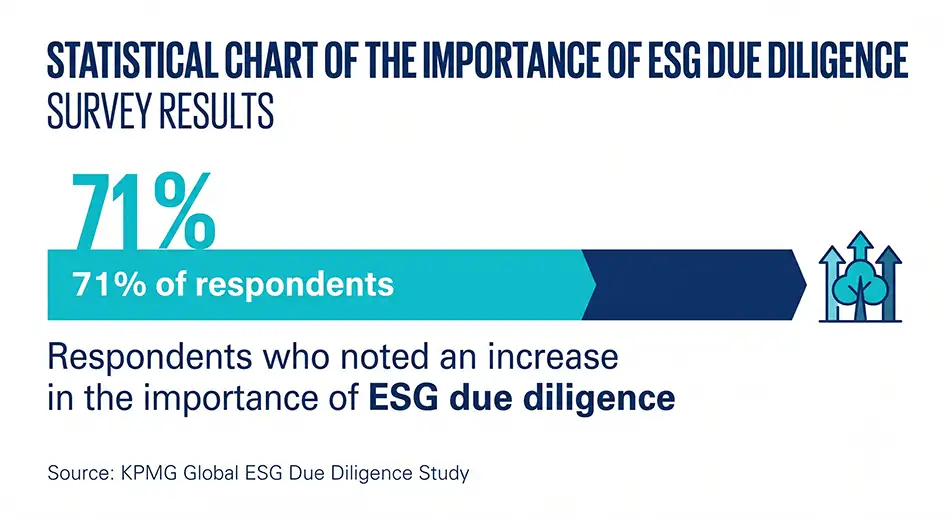
The relevance of non-financial factors is increasing. According to the 2024 KPMG study, 71% of respondents reported increased importance of ESG due diligence in deals over the previous 12-18 months.
The process begins with defining the deal’s purpose and a list of critical questions. Without a pre-agreed scope, the team may spend time on documents that do not affect the asset evaluation.
The work is typically carried out sequentially:
Consultation with an accountant is necessary to check accounting policies, primary documents, accounts receivable, and accuracy of financial indicators. Conclusions must distinguish confirmed violations from assumptions and issues where documents were not provided.
The presence of a risk does not always mean the deal must be abandoned. It is important to establish its size, probability of realization, and the possibility of contractual protection.
During the check, the following are most often analyzed:
Legal consultation helps translate identified circumstances into specific contractual terms: representations and warranties, indemnification, price retention, escrow, or the right to terminate the deal.
For regulated or technologically complex industries, standard checks are insufficient. Additional types include anti-corruption, environmental, sanctions, reputational, technical, insurance, land, antitrust, and intellectual property due diligence.
Separate analysis is required for ESG obligations, carbon footprint, human rights in supply chains, personal data processing, and AI usage. The scope of the check must comply with the legislation of jurisdictions where the parties are registered, assets located, and activities performed.
Identified issues must be reflected in the financial model and deal documents. For each material risk, the responsible party, deadline for resolution, and control method are defined.
Practical mechanisms include:
The scale of deals increases the cost of error. According to PwC data, the share of transactions worth over $5 billion in the global M&A value rose from 26% in 2024 to 39% in 2025 and 48% in 2026. Under such conditions, audit results must be integrated into valuation, financing structure, and post-deal integration plan.