Article 631 of the Civil Code of Ukraine (CCU) regulates the term of the contract—that is, the period during which the parties may exercise their rights and must fulfill the obligations ...

20Oct


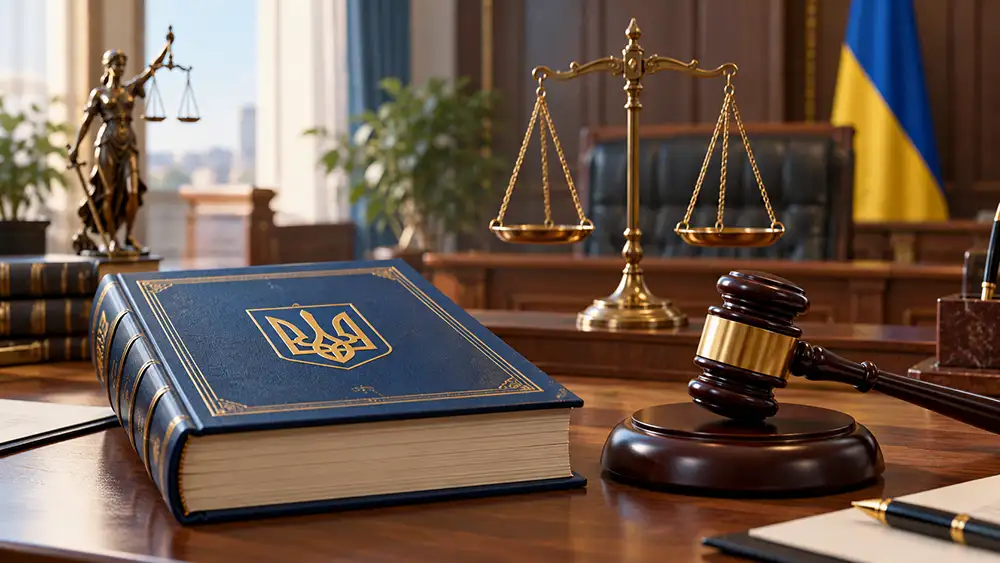
CCU is a common informal abbreviation for the “Criminal Code of Ukraine.” In legal documents, the abbreviation “CC Ukraine” is more often used. It refers to the same normative act—the Criminal Code of Ukraine dated April 5, 2001, No. 2341-III, which came into force on September 1, 2001.
Simply put, the CCU defines which socially dangerous actions or inactions in Ukraine may lead to criminal liability and what criminal-legal consequences the law provides. The Code itself explicitly establishes that the criminal unlawfulness of an act, its punishability, and other criminal-legal consequences are determined by the Criminal Code of Ukraine. Applying the criminal law by analogy is prohibited.
Criminal Code of Ukraine – Official Text
Article 1 of the CCU defines its main task—to protect human rights and freedoms, property, public order and safety, the environment, the constitutional order, as well as to ensure peace and security of humanity and prevent criminal offenses. For this purpose, the Code establishes which acts are criminal offenses and which punishments may be applied.
For a citizen, this means that the CCU helps to clarify:
However, the article’s title alone is not enough. For an accurate legal assessment, it is necessary to consider the specific part of the article, the circumstances of the event, the form of guilt, consequences, the status of the person, and other legally significant facts.
The Criminal Code consists of the General and Special Parts. This structure allows for separately establishing general rules of criminal liability and describing specific elements of criminal offenses.
It contains rules applied to many criminal offenses. It regulates concepts such as guilt, intent and negligence, complicity, attempt, necessary defense, punishment, criminal record, exemption from liability, and other general issues.
The Special Part contains specific criminal offenses. This is where, for example, articles regarding intentional murder, theft, robbery, fraud, traffic safety crimes, official and military criminal offenses are located.
Therefore, commentary or scientific analysis of a certain article of the CCU should be read together with the General Part of the Code. Otherwise, it is easy to miss rules that directly affect the application of a specific article.
According to Article 11 of the Criminal Code of Ukraine, a criminal offense is a socially dangerous guilty act in the form of action or inaction, committed by a subject of criminal offense, as provided by the Code. At the same time, formal similarity of behavior to the description in the article does not always mean a criminal offense: the law separately considers insignificance of the act.
Criminal offenses are divided into:
A criminal misdemeanor is an act punishable primarily by a fine not exceeding 3000 non-taxable minimum incomes of citizens or another punishment not involving imprisonment. A minor crime may provide for imprisonment up to 5 years, a serious crime – up to 10 years, and an especially serious crime – over 10 years or life imprisonment. The exact criteria are established by Article 12 of the CCU.
The mere fact of suspicion or a police report does not mean that a person is guilty. According to Article 2 of the CCU, the basis for criminal liability is the commission of a socially dangerous act containing the elements of a criminal offense. Guilt must be proven legally and established by a court conviction.
The Criminal Procedure Code additionally establishes the principle of the presumption of innocence: a person is not obliged to prove their innocence, and the prosecution must prove guilt beyond reasonable doubt.
Criminal Procedure Code of Ukraine
The general rule of Article 22 of the Criminal Code of Ukraine is that criminal liability begins at 16 years old. For certain offenses explicitly defined, it is possible from 14 years old, including intentional murder, severe bodily injury, theft, robbery, assault, terrorist acts, and several other offenses.
Therefore, the statement that “there is no criminal liability under 16 at all” is incorrect.
No. Punishment is not limited to imprisonment. Article 50 of the CCU defines punishment as a coercive measure imposed by a court on a person found guilty. Its purpose includes not only punishment but also correction of the convicted person and prevention of new crimes.
The specific type and extent of punishment depend on the article and circumstances of the case. In practice, the algorithm is as follows:
Therefore, one and the same colloquial event name, such as “theft” or “fight,” without analyzing specific circumstances, does not allow precise determination of legal consequences.
These abbreviations are often confused, although they concern different legal issues.
CCU defines what constitutes a criminal offense and the liability envisaged for it. CPC of Ukraine establishes criminal procedure— from investigation and procedural actions to court proceedings. CAOA regulates administrative offenses, not criminal ones.
This is a fundamental difference. An administrative fine for an offense and a criminal conviction have different legal natures and different consequences.
If a person sees a reference to a CCU article in a suspicion notice, court decision, or other document, it is worth checking not only the article number.
Pay attention to:
This is especially important due to legislative changes. Article 5 of the CCU establishes that a law abolishing criminal unlawfulness, mitigating liability, or otherwise improving a person’s position may have retroactive effect. A law worsening the position does not have this effect.
CCU is a common abbreviation for the phrase “Criminal Code of Ukraine.” In professional legal texts, “CC Ukraine” is often used.
The police carry out actions provided by law within criminal proceedings, but criminal punishment is imposed by the court. A person is presumed innocent until guilt is established by a legally effective conviction.
Generally, no. The Constitution of Ukraine provides that no one can be held liable for an act that was not recognized as an offense by law at the time of its commission. A law increasing liability does not have retroactive effect.
Yes. Article 59 of the Constitution of Ukraine guarantees the right to professional legal assistance, which is provided free of charge in cases stipulated by law.
The most reliable source is the official database “Legislation of Ukraine” of the Verkhovna Rada. As of October 1, 2026, the Criminal Code of Ukraine No. 2341-III is in force, and the VRU portal indicates the current edition as of September 18, 2026.