Online accounting has become one of the most convenient tools for sole proprietors (FOP), small businesses, outsourced accountants and companies that want to quickly manage taxes, reporting, ...

24Apr



Registering a company or sole proprietorship (FOP) in Ukraine often starts with choosing the organizational form, taxation system, and accounting method. For small businesses, the FOP format remains a practical way to start: registration through “Diia” is free, submitting the application takes about 10 minutes, and registration itself can happen automatically within a minute. After opening an FOP, the entrepreneur immediately faces the question: manage accounting independently or outsource it to an accounting service.
FOP accounting is not just submitting a declaration once a quarter or annually. It covers income control, correct selection of KVED codes, maintaining primary documents, payment of taxes, single social contribution (ESC), military levy, checking limits, and storing operation confirmations.
Entrepreneurs need to understand which processes will require monthly control.
These processes form the basis of financial discipline for an FOP. If the entrepreneur sells goods, employs hired workers, accepts payments via POS terminals, or works with foreign clients, accounting becomes more complex.
According to the State Tax Service, in 2026 the minimum wage is 8,647 UAH, and the subsistence minimum for able-bodied persons is 3,328 UAH. These figures affect tax payments for FOPs on the simplified system.
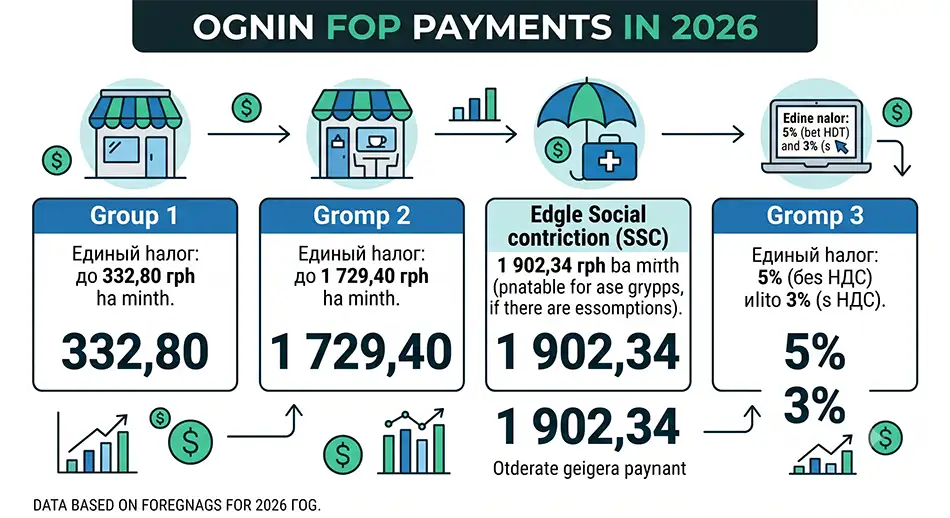
Comparing key parameters helps quickly evaluate the level of responsibility.
These figures should be considered at the stage of company registration, FOP opening, switching tax groups, or choosing between FOP and LLC. Errors in the unified tax group can lead to recalculations, fines, and the necessity to switch to the general tax system.
Self-accounting suits FOPs with simple transactions: one unified tax group, a small number of payments, no hired workers, clear KVED codes, and regular monitoring of the electronic cabinet. Often these are freelancers, consultants, service providers, online specialists, and small sellers without complex inventory accounting.
Tips for self-management of accounting should be applied systematically, not only before declaration submission.
This approach reduces the risk of missed payments. However, self-accounting requires time, attention, and regular updating of knowledge, as reporting rules, declaration forms, and tax explanations change.
Accounting resources are needed even for entrepreneurs who do not plan to hire an accountant. They help check tax debt, submit declarations, control income, and prepare documents.
The most useful are official and practical tools.
Entrepreneurs working with marketplaces, international platforms, advertising, IT services, or goods import often need more than basics. In such cases, evaluating FOP accounting outsourcing is advisable.
Outsourced accounting becomes reasonable when the cost of a mistake is higher than the service fee. This is especially relevant for 3rd group FOPs, entrepreneurs with VAT, employers, online stores, service exporters, businesses with many payments, and those considering registering a company as an LLC.
It’s better to decide on outsourcing based on risk indicators.
Outsourcing FOP accounting relieves the entrepreneur from part of the operational workload. The accountant monitors deadlines, verifies payments, prepares declarations, advises on documents, and helps preserve the right to the simplified system.
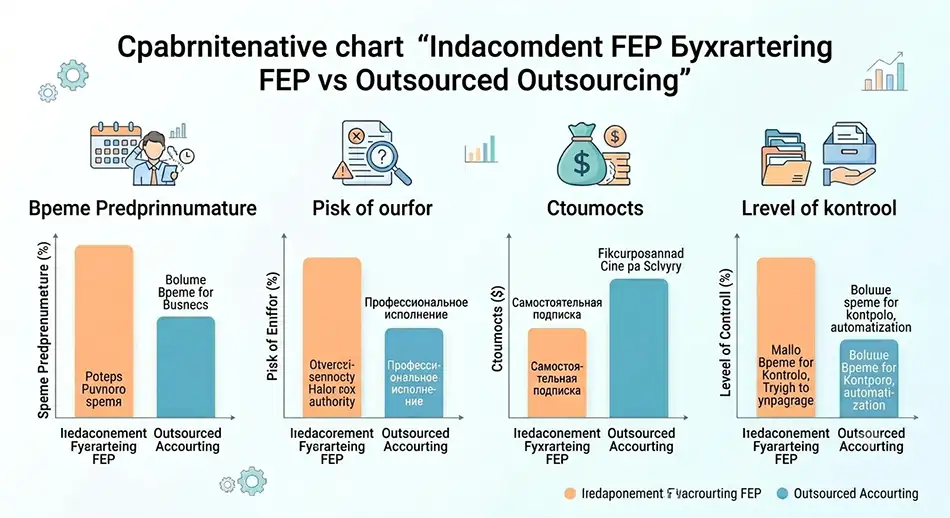
The choice depends not on the desire to “save,” but on business model complexity. FOPs without employees and with few monthly payments can handle accounting independently. FOPs with active sales, advertising, returns, contractors, and currency operations require professional support.
A comparison helps evaluate the real picture.
For many FOPs, the combined model is optimal. The entrepreneur controls income and documents daily, and the accountant checks reports, taxes, groups, limits, and risky operations.
You can order a professional consultation with expert accountants on this page. One request, several consultations with independent specialists. Choose the best terms.
After opening an FOP or when planning company registration, it’s necessary to set up accounting immediately. This is cheaper than restoring documents for several months or fixing errors after a tax notice.
The basic organization scheme looks like this.
This scheme suits both beginners and existing entrepreneurs. It’s also useful before switching from FOP to LLC when company registration is the next stage of business development.


